
Views: 0 Author: Site Editor Publish Time: 2026-08-28 Origin: Site


Mismatched material handling equipment silently drains facility productivity. Over-equipping a workspace with heavy machinery creates severe bottlenecks in tight aisles. Under-equipping leaves operators fatigued and slows down daily throughput. Facility managers constantly face this operational balancing act. You must meet daily throughput requirements. You must navigate strict spatial constraints like narrow intersecting aisles and mezzanine floor limits. You must also maintain rigorous operator safety standards. Choosing the right tool requires an objective, criteria-based evaluation. Relying on assumptions leads to inefficient workflows and wasted floor space. You need to determine exactly how materials move through your building. We will analyze specific warehouse workflows, horizontal transport distances, and facility layouts. This evaluation determines whether powered pallet movers, a traditional forklift, or a hybrid fleet provides the best operational fit for your specific environment.
Movement Dynamics: Forklifts are mandatory for vertical stacking and heavy-duty outdoor yards; electric pallet trucks dominate high-speed, horizontal indoor transport.
Spatial Economics: Electric pallet trucks operate efficiently in tight, congested aisles where standard forklifts cannot safely maneuver, maximizing usable floor space.
Deployment & Setup: Pallet trucks offer immediate, "grab-and-go" readiness, bypassing the lengthy pre-shift inspections and setup times required for forklift operation.
Operator Ergonomics: Upgrading to powered pallet movers drastically reduces operator fatigue and injury rates compared to manual alternatives, without the intensive certification required for forklifts.
Facility managers must audit their current state before introducing new equipment. You cannot improve what you do not measure. Start by tracking daily pallet movement volume. Count how many pallets enter through the receiving dock and move to storage. Measure the average horizontal transport distance for these runs. Short runs under fifty feet require different tools than long runs crossing massive distribution centers.
Shift durations also dictate equipment selection. A facility running a single eight-hour shift places different demands on equipment than a continuous operation. Document how often equipment sits idle versus actively moving loads. Identify peak operational hours where congestion occurs. This baseline data provides the factual foundation for your equipment strategy. It removes guesswork from the procurement process.
To establish a solid baseline, track these specific metrics over a two-week period:
Total inbound pallets received per shift.
Average distance from the receiving dock to the primary staging area.
Number of times a single pallet is touched or relocated before final put-away.
Peak traffic hours in main travel aisles.
Average weight and overhang dimensions of outbound loads.
Physical limitations strictly dictate your equipment choices. You must measure minimum intersecting aisle widths. Equipment must navigate these intersections without striking racking systems or pedestrians. Turning radiuses represent another hard constraint. A machine that cannot turn within your existing layout forces you to reconfigure racking, which disrupts operations.
Evaluate your floor load capacities, especially on mezzanine levels or older concrete slabs. Heavy machinery exerts massive point loads through small tire contact patches. Exceeding floor limits causes structural damage. Check door heights, overhead lighting, HVAC ducts, and sprinkler heads throughout the facility. Equipment masts and overhead guards must pass through all operational zones without obstruction. These physical boundaries eliminate certain equipment categories immediately.
Consider the condition of your dock plates and transition zones. Steep inclines from the warehouse floor into a trailer bed require equipment with sufficient undercarriage clearance. Low-clearance machines will high-center on steep dock levelers, trapping the load and halting the loading process.
Workflows generally prioritize either rapid movement or maximum storage. High-throughput operations focus on dock-to-stock horizontal movement. Cross-docking facilities exemplify this model. Pallets arrive, move across the floor, and load directly onto outbound trailers. Speed and horizontal maneuverability define success here. Equipment must travel fast and weave through staging lanes.
Conversely, high-density storage workflows require multi-level vertical racking. Facilities with limited square footage build upward. This requires specialized lifting capabilities. You must reach third, fourth, or fifth-tier rack positions safely. The workflow dictates the machine. Horizontal speed matters little if the primary task involves lifting pallets twenty feet into the air. Understand your primary operational driver before selecting machinery.
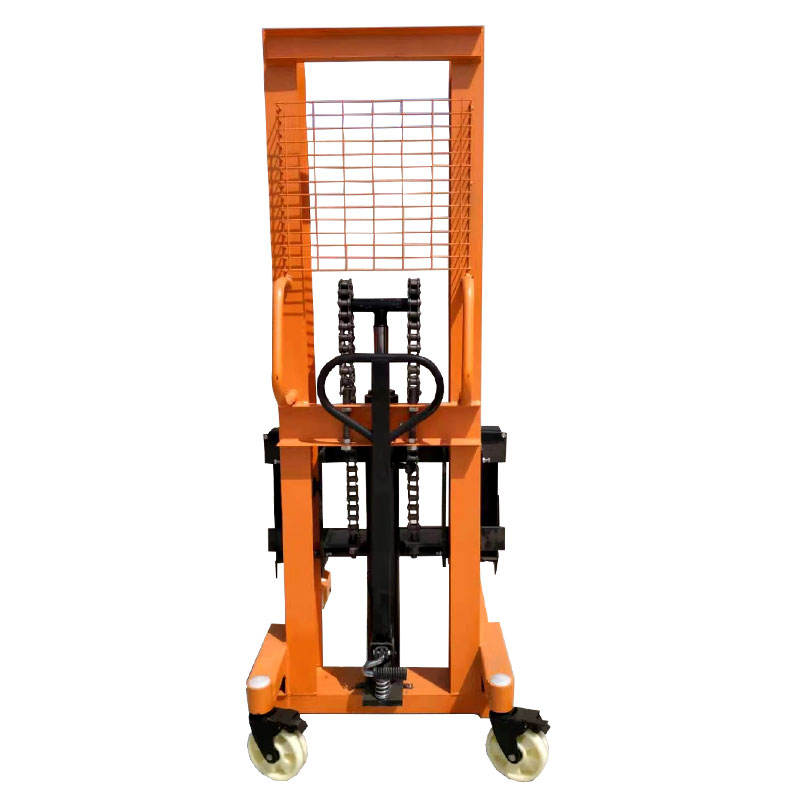
Counterbalance and reach forklifts serve as the heavy lifters of the industrial world. Their primary function involves high-capacity lifting and vertical stacking. They excel at loading and unloading materials from ground level to high storage tiers. A standard counterbalance forklift uses a heavy rear weight to offset front loads. Reach trucks operate in narrower aisles, extending their forks into racking systems.
These machines carry inherent drawbacks. They require a massive operational footprint. They demand strict licensing requirements and extensive operator training. Deployment times are slower due to mandatory pre-shift inspections and safety checks. Environments dictate the specific type. Electric forklifts suit indoor stacking with zero emissions. Diesel or internal combustion forklifts remain necessary for rough outdoor yards and long exterior shifts.
When operating a forklift, the driver must constantly monitor mast sway, load center gravity, and overhead obstructions. This mental load, combined with the physical size of the machine, means forklifts move slower through pedestrian-heavy zones. They are built for power and vertical reach, not for weaving through tight, ground-level congestion.
The fully powered electric pallet truck stands as the industry standard for rapid, horizontal pallet relocation. These machines eliminate manual pushing and pulling entirely. They utilize electric motors for both propulsion and hydraulic lifting. Walkie models work best for short-distance transport where the operator walks behind the unit. Ride-on models serve as the true high-speed alternative to forklifts for long-distance horizontal runs across large facilities.
The primary advantages center on agility and readiness. They produce zero emissions, making them perfect for enclosed spaces. Their compact turning radius allows them to operate in narrow aisles and tight staging areas. They offer immediate operator readiness with minimal setup. They excel at trailer loading and unloading, easily navigating dock plates and confined trailer interiors where larger machines struggle.
Operators can step on and off a ride-on unit in seconds. This makes them highly effective for order picking sequences where the worker must frequently leave the machine to grab individual cases. The low step-in height reduces knee and back strain over a long shift.
Many facilities transition from manual jacks but lack the volume for fully powered fleets. The semi-electric pallet truck provides a strategic bridge. These units combine powered drive propulsion with manual hydraulic lifting. The electric motor handles the horizontal travel, which causes the most operator strain. The operator still pumps the handle to lift the load off the floor.
This hybrid approach reduces physical exertion during occasional load movements. A specific use-case involves deploying a 1500kg semi-electric pallet truck in medium-duty retail backrooms. These environments require moving heavy beverage or grocery pallets, but full electric models prove excessive. Localized manufacturing cells also benefit. Operators can quickly reposition raw materials between workstations without waiting for a dedicated forklift driver.
These units maintain the exact same footprint as a standard manual jack. You can park them under racking bottom beams or tuck them into tight corners. They provide motorized assistance exactly where workers need it most: overcoming the initial rolling resistance of a heavy pallet.
Operational Feature | Traditional Forklift | Fully Electric Pallet Truck | Semi-Electric Pallet Truck |
|---|---|---|---|
Primary Function | Vertical stacking, heavy lifting | Rapid horizontal transport | Intermittent horizontal transport |
Aisle Requirement | 12+ feet (Counterbalance) | 6 to 8 feet | 5 to 7 feet |
Operator Position | Seated or standing inside cabin | Walk-behind or ride-on platform | Walk-behind only |
Training Requirement | Extensive OSHA/regional certification | Basic operational training | Minimal familiarization |
Deployment Speed | Slower (requires pre-shift checks) | Immediate (grab-and-go) | Immediate (grab-and-go) |
Vertical Reach | Up to 30+ feet depending on mast | Ground level clearance only (approx. 8 inches) | Ground level clearance only (approx. 8 inches) |
Space dictates efficiency. A standard counterbalance forklift requires a right-angle stacking width of twelve feet or more. The machine must turn completely perpendicular to the racking to insert a pallet. This massive footprint forces facilities to maintain wide, sprawling aisles. Every foot dedicated to aisle space is a foot lost for storage racking.
Pallet trucks feature a minimal footprint. They pivot almost within their own length. This allows facility managers to optimize warehouse layouts. You can narrow your aisles significantly. Reclaiming just three feet per aisle across a large facility allows you to install entire new rows of racking. The ability to maneuver in tight, congested areas keeps operations flowing when staging lanes fill up during peak hours.
When designing a floor plan, you must account for pedestrian walkways alongside equipment travel lanes. A forklift requires a dedicated, wide lane to ensure pedestrians remain outside the swing radius of the rear counterweight. Smaller powered jacks can safely share narrower corridors with foot traffic, provided operators follow standard right-of-way protocols.
Establish a hard operational boundary. If pallets must go into elevated racks, a forklift or specialized stacker is non-negotiable. Pallet trucks only lift loads high enough to clear the floor. You cannot use them for vertical put-away. However, using a forklift strictly for ground-level horizontal transport introduces massive inefficiency.
Analyze the operational waste of this mismatch. Forklifts consume more energy, incur heavier maintenance wear, and create spatial bottlenecks. They move slower across open floors compared to ride-on pallet trucks. A ride-on unit travels faster, navigates around obstacles easier, and completes dock-to-stock horizontal runs in less time. Match the machine's primary dynamic to the specific task.
Consider the process of loading an outbound trailer. A forklift must carefully inch into the trailer, ensuring the mast clears the roof. The driver must constantly check blind spots. A worker on a powered jack simply drives straight in, drops the pallet, and zips back out. The horizontal speed difference over a full shift is staggering.
Continuous operational limits vary wildly. Forklifts handle massive loads, ranging from 3,000 to well over 10,000 pounds. They feature heavy counterweights and robust hydraulic systems designed for continuous, multi-shift abuse. Fully powered pallet trucks generally max out around 4,500 to 8,000 pounds. They handle standard warehouse loads efficiently but cannot manage oversized industrial materials like steel coils or massive lumber bunks.
Duty cycles determine longevity. A warehouse-grade semi-electric pallet truck handles intermittent, shift-based usage perfectly. It moves pallets a few times an hour. Contrast this with the continuous demands placed on heavy-duty electric forklifts. Forklifts run constantly, lifting and driving simultaneously. Pushing a semi-electric unit beyond its intended duty cycle leads to premature component failure. Understand your daily usage frequency.
You must also evaluate the type of pallets you use. Standard GMA wooden pallets work seamlessly with all equipment. However, specialized skids or closed-bottom pallets require specific fork configurations. Ensure the load capacity of the machine aligns not just with the weight of the product, but with the dimensions and structural integrity of the pallets carrying it.
Manual pulling destroys operator ergonomics. Moving heavy loads by hand causes severe musculoskeletal strain over a shift. Powered horizontal movement eliminates this physical toll. Operators use thumb controls to drive the load forward. This ergonomic upgrade keeps workers fresh, maintains consistent operational speed, and reduces workplace injury reports.
Safety profiles differ drastically. Forklifts carry high-severity risks. Tip-overs occur if operators turn too fast with elevated loads. Large masts create dangerous blind spots. Pedestrian collisions involving forklifts often result in severe consequences. Pallet trucks present lower-impact risks. The load stays at ground level, eliminating tip-over hazards. The operator maintains a clear line of sight. While foot crush injuries remain a risk, the overall safety profile is significantly more manageable.
To maximize safety with ground-level equipment, facilities should implement strict parking protocols. Leaving a walkie unit protruding into an aisle creates a severe tripping hazard. Designate painted parking boxes at the end of aisles or near charging stations to keep travel paths clear.
Adopting new equipment requires infrastructure prerequisites. Electric fleets need dedicated charging zones. Traditional lead-acid batteries demand specific ventilation systems to disperse off-gassing during charging. They also require eyewash stations and spill kits. Modern lithium-ion systems reduce these requirements but still need dedicated wall space for chargers. Assess your electrical grid capacity before plugging in multiple high-draw chargers.
Floor conditions dictate equipment success. Pallet trucks utilize hard polyurethane wheels. These wheels require smooth, indoor concrete surfaces. They shatter or stall on rough terrain. Contrast this against pneumatic-tire forklifts designed for rough, outdoor environments. Address the risk of dock plate transitions. Steep dock plates or uneven floor joints will ground low-clearance pallet trucks, trapping the load and halting operations.
Inspect your expansion joints and concrete seams. Wide gaps in the floor will chew up polyurethane load wheels in a matter of weeks. You must fill and grind these joints smooth before deploying small-wheeled indoor equipment. Ignoring floor maintenance leads to constant wheel replacements and jarring rides for the operators.
Heavy machinery requires rigorous compliance. OSHA and regional equivalents mandate strict certification for forklift operators. This involves classroom hours, practical driving tests, and regular recertification. This training creates a barrier to deployment. You cannot simply pull a worker from another department to drive a forklift during a busy shift. Specialized operators are required.
Pallet trucks present minimal training friction. They lack mandatory specialized licensing requirements in most jurisdictions. Operators learn the controls in minutes. This lower barrier allows for flexible labor deployment. Any trained warehouse associate can grab a walkie unit to clear a congested staging lane. This flexibility prevents bottlenecks when dedicated drivers are unavailable.
Even without formal licensing, you must enforce strict operational rules. Operators must learn to trail the load when walking down ramps. They must understand how to use the emergency belly-button reverse switch. Proper familiarization prevents the most common low-speed impacts and foot injuries associated with walkie units.
Growing facilities eventually require a hybrid fleet model. Do not force one machine to do everything. Use forklifts exclusively for loading, unloading, and vertical put-away. Keep them in the aisles where their lifting power is needed. Deploy electric pallet trucks for staging, cross-docking, and order picking. This division of labor maximizes the efficiency of both machine types.
Identify your operational tipping points. A facility might start with manual jacks, then upgrade to semi-electric units as volume grows. Eventually, the operation outgrows the intermittent duty cycle of those units. When operators spend more time waiting for equipment than moving loads, you must transition to fully electric walkies or ride-ons. Monitor your daily throughput to anticipate these necessary fleet upgrades before they impact delivery schedules.
A successful hybrid fleet relies on designated transfer zones. Forklift operators pull pallets from high racks and drop them in a marked staging square. A walkie operator then picks up the pallet and runs it to the shipping dock. This relay system keeps the forklift in the narrow aisles and the walkie in the open transit lanes, optimizing the strengths of both machines.
Audit your current daily pallet movement volume and horizontal transport distances to establish a factual baseline.
Measure all intersecting aisles, turning radiuses, and dock plate inclines to determine maximum allowable equipment dimensions.
Separate your vertical storage tasks from your horizontal transport tasks to identify immediate hybrid fleet opportunities.
Evaluate your floor conditions, specifically expansion joints and concrete seams, to ensure compatibility with polyurethane wheels.
Establish designated transfer zones where forklifts drop loads for powered jacks to transport to the shipping dock.
A: No. If your facility utilizes elevated racking systems, a forklift or specialized stacker is required. Pallet trucks only lift loads high enough to clear the floor for horizontal transport. They cannot perform vertical put-away tasks.
A: Generally, no. While operators must receive basic safety and familiarization training provided by the employer, powered pallet movers do not require the rigorous, formal OSHA certification mandated for traditional counterbalance or reach forklifts.
A: They require smooth, flat, indoor concrete surfaces. They use hard polyurethane wheels that provide excellent traction on smooth floors but will stall, chip, or get stuck on rough terrain, gravel, or severely uneven pavement.
A: Semi-electric models feature a battery-powered drive motor for horizontal travel but rely on manual hydraulic pumping to lift the load. Fully electric models use battery power for both driving and lifting, eliminating all manual exertion.
A: Yes, for horizontal ground-level transport. Ride-on units are designed for rapid transit across large distribution centers. They maneuver through tight spaces faster and have higher top speeds for long-distance runs compared to standard forklifts.
A: Yes. Their compact size, low weight, and tight turning radius make them ideal for loading and unloading directly inside trailers. Forklifts are often too heavy or too tall to safely operate inside standard enclosed trailers.


