
Views: 0 Author: Site Editor Publish Time: 2026-08-14 Origin: Site


Warehouse throughput demands are accelerating in 2026. The global material handling market is expanding rapidly to meet unprecedented supply chain velocity. In this high-volume environment, equipment selection becomes either an operational bottleneck or a primary driver of efficiency. Selecting under-specced or non-compliant equipment leads to accelerated wear. It causes severe operator fatigue, frequent maintenance downtime, and increased safety liabilities across the facility. Objectively evaluating an electric pallet truck requires moving far beyond baseline specifications. You must analyze load realities, travel distances, operator behavior, facility constraints, and long-term maintenance risks. Relying solely on spec sheets often results in mismatched fleet deployments. This guide breaks down exactly how to match powered equipment to your specific operational reality. We focus on practical metrics, environmental limitations, and the mechanical durability required for continuous warehouse operations.
Match Capacity to Peak Reality: Specify equipment based on maximum operational loads and incline requirements, not just average pallet weights.
The Manual vs. Electric Tipping Point: Upgrading to powered equipment is justified by calculating daily travel distances, frequency of use, and the reduction of operator fatigue.
Prioritize Regulatory Compliance: Mandating a CE-certified electric pallet truck mitigates workplace safety risks and ensures adherence to international manufacturing standards.
Battery Chemistry Drives Lifecycle Value: The choice between Lithium-ion and traditional Lead-Acid/AGM dictates charging infrastructure, duty cycle capability, and overall long-term operational costs.
Evaluate After-Sales Viability: Upfront equipment costs must be weighed against parts availability, dealer support networks, and real-world maintenance bottlenecks.
Evaluating frequency of use and travel distance thresholds dictates when to upgrade from manual jacks to powered solutions. Moving heavy pallets manually over distances exceeding 20 meters drains operator energy rapidly. The physical strain of overcoming static inertia with a 1500kg load causes significant ergonomic wear over an eight-hour shift. When an operator pulls a heavy load from a standstill, the initial push force required spikes massively. Doing this thirty times a shift destroys shoulders and lower backs. Calculate the return on investment by measuring reduced operator fatigue and fewer workplace injury claims. Powered equipment accelerates staging times significantly. Faster pallet movement directly increases daily throughput. When operators spend less time dragging loads, they dedicate more time to accurate order picking and inventory management. The transition point usually occurs when a single operator moves more than thirty pallets per shift across distances greater than 15 meters.
Calculate true load weights accurately before specifying equipment capacity. Include packaging, shrink wrap, and pallet tare weights in your assessments. Do not rely solely on the net product weight. Dynamic loads shift during transit, placing uneven stress on the fork chassis. A liquid tote sloshing during a turn affects the chassis differently than a solid block of steel. Define your duty cycles clearly to determine battery requirements. Count the exact number of shifts per day. Track continuous operation hours per operator. Determine required charging intervals based on these active shifts. Heavy usage demands robust battery solutions and heavy-duty drive motors. Underestimating the duty cycle leads to mid-shift battery depletion and thermal overload in the drive motor. Always specify capacity based on the heaviest single load encountered, not the facility average.
Measure minimum intersecting aisle widths carefully. Map out warehouse size and turning radius limitations before finalizing equipment dimensions. Evaluate flooring conditions across the entire facility. Uneven surfaces, expansion joints, and steep dock plates severely impact wheel selection and chassis clearance. Polyurethane wheels offer quiet, floor-protecting operation for smooth concrete. Nylon wheels provide high durability for harsh environments littered with debris. Calculate ramp gradients accurately. Ensure motor torque aligns with your specific incline requirements. Operating a fully loaded truck on a 5% grade requires significantly more amperage than flat-floor travel. Verify that the undercarriage clearance prevents high-centering on dock leveler transitions.
Measure the narrowest aisle width where two pieces of equipment might pass each other.
Calculate the right-angle stack requirement for your specific pallet dimensions.
Identify the maximum grade percentage of your steepest loading dock ramp.
Inspect floor expansion joints for severe degradation that could damage small load wheels.
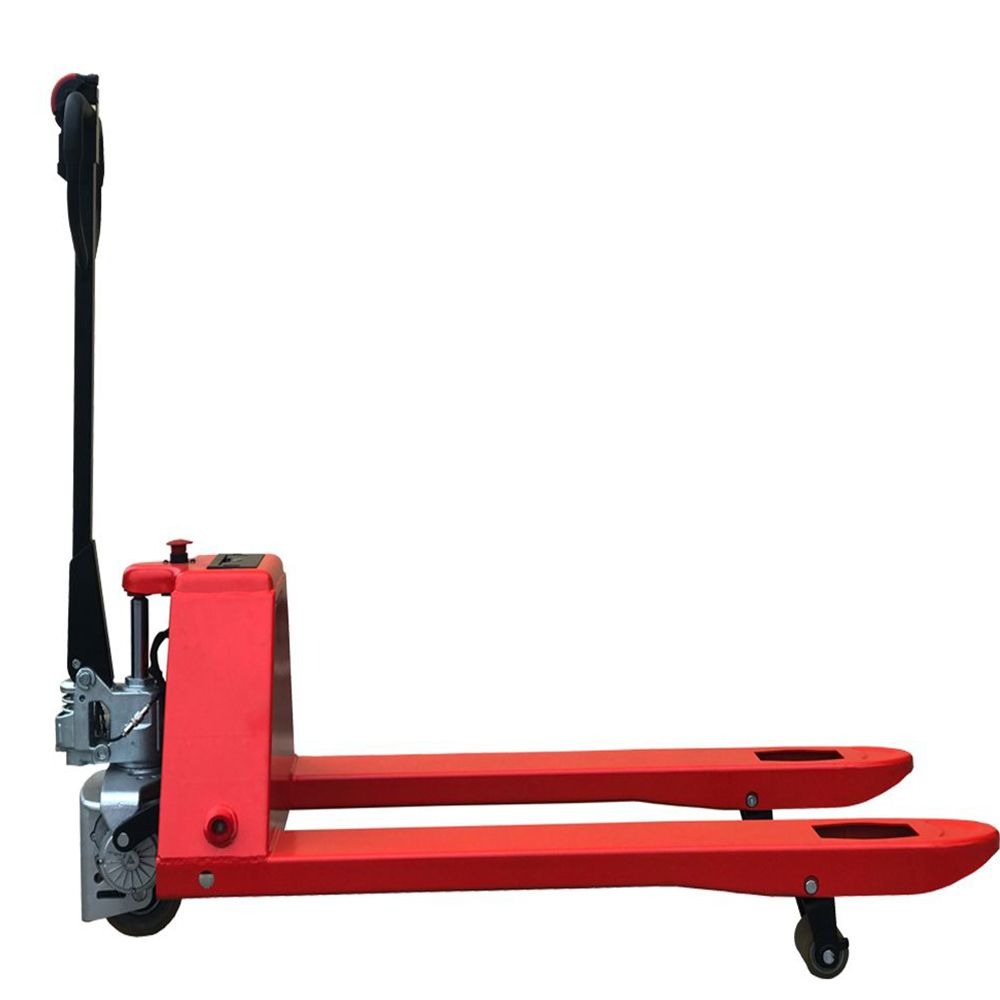
These models feature a highly compact chassis. They handle lighter capacities ranging from 1200kg to 1500kg. Engineers optimize them for maneuverability in confined spaces and retail aisles. They utilize permanent magnet brushless motors for efficient, low-heat operation. Trade-offs exist with these lighter units. They have lower battery capacity and thinner steel aprons. They are not suitable for continuous multi-shift heavy industrial use. Deploying light-duty units in harsh cross-docking applications leads to rapid structural failure. They excel in environments where space is limited and usage is intermittent throughout the day. Operators frequently use them for pinwheeling pallets inside tight delivery trailers.
Heavy-duty models feature reinforced box-stamped forks and high-torque AC drive motors. They house larger battery banks designed for extended shifts. Specify a 3000kg electric pallet truck for dense manufacturing components. Beverage distribution and metal fabrication also require this massive capacity. A 3-ton electric pallet truck establishes high performance baselines. It thrives in high-throughput cross-docking environments. These units utilize dual load wheels to distribute massive weights evenly across the floor. The thicker steel gauge on the chassis withstands constant impacts from heavy pallets and dock plates. The drive tires are typically larger and made of harder compounds to resist chunking under extreme loads.
Walkie models work best for short travel distances. Use them for runs under 30 meters and precise staging inside trailers. The operator walks behind the unit, maintaining maximum visibility. Ride-on or platform models reduce operator fatigue over long distances. They require wider operating aisles to accommodate the folding platform and side restraints. Ride-on units offer higher speed capabilities for massive distribution centers. Electric Power Steering (EPS) is often standard on ride-on models, allowing effortless maneuvering at high speeds. Choose ride-on configurations when operators spend more than 50% of their shift traveling between distant warehouse zones.
Feature | Walkie Configuration | Ride-On (Platform) Configuration |
|---|---|---|
Operator Position | Pedestrian (walking behind or beside) | Standing on a folding platform |
Ideal Travel Distance | 0 to 30 meters | 30+ meters |
Maximum Speed | Typically 4 - 6 km/h | Typically 8 - 12 km/h |
Aisle Width Requirement | Narrow (highly maneuverable) | Wider (needs room for platform swing) |
Fatigue Reduction | Moderate (eliminates pulling/pushing) | High (eliminates walking entirely) |
Lithium-ion batteries offer exceptional opportunity charging capabilities. Operators can plug them in during 15-minute breaks without damaging the cells. They require zero maintenance and eliminate the need for dedicated battery rooms. They carry a higher upfront cost but deliver superior multi-shift efficiency. Advanced Battery Management Systems (BMS) prevent thermal runaway and optimize cell balancing. Lead-Acid or AGM batteries require lower initial capital expenditure. They demand strict charging, watering, and cooling protocols. Lead-Acid remains suitable for single-shift operations where the truck rests overnight. Failing to equalize lead-acid batteries severely degrades their lifespan and operational capacity. You must factor in the labor hours spent checking water levels and cleaning acid spills when evaluating lead-acid systems.
Match fork length and width to standard regional pallets. Euro pallets require different dimensions than standard GMA pallets used in North America. Using incorrect fork widths causes pallet splintering and unstable loads. Evaluate the fork tip design carefully. Tapered tips and integrated entry rollers allow easy pallet entry and exit. Smooth entry reduces product damage during rapid staging. C-channel forks offer good strength, but box-stamped forks provide superior resistance to torsional twisting under heavy, off-center loads. Measure the bottom board clearance of your specific pallets to ensure the lowered fork height is compatible. If your facility handles custom skids, you may need to order specialized fork lengths to prevent the tips from protruding and damaging adjacent inventory.
Factor in rough handling during peak operational hours. Evaluate chassis thickness and reinforced steel aprons. High impact resistance prevents structural failure when operators collide with racking. Tiller arm design matters immensely for daily productivity. Ergonomic controls reduce operator wrist strain and boost efficiency. Creep speed functionality is vital. It allows vertical tiller operation for navigating ultra-tight spaces safely inside delivery trucks. Impact sensors can be installed to monitor abuse and hold operators accountable. Robust metal covers protect internal hydraulic components better than brittle plastic shrouds in harsh environments. Look for sealed wire harnesses that prevent moisture and dust from corroding electrical connections over time.
A CE-certified electric pallet truck is a non-negotiable baseline for European operations and global safety standards. It provides liability protection and guarantees equipment reliability under the Machinery Directive. Verify all documentation thoroughly before procurement. Avoid counterfeit compliance labels by checking manufacturer credentials and requesting the official Declaration of Conformity. CE certification ensures the electrical systems, hydraulic pressure limits, and emergency stops meet stringent testing criteria. Operating uncertified equipment exposes the facility to massive legal risks and invalidates insurance policies during workplace accidents. Safety inspectors will immediately red-tag uncertified machinery, halting your warehouse operations entirely.
Evaluate electromagnetic braking systems rigorously. These brakes engage automatically when the tiller arm is released. Anti-rollback features are critical on inclines, preventing the truck from slipping backward on loading ramps. Test emergency stop buttons and belly switches. Belly switches instantly reverse the truck's direction if it pins the operator against a wall. Automatic speed reduction during cornering prevents load spills and tipping. Regenerative braking extends battery life while providing smooth, controlled deceleration. Ensure the horn is loud enough to be heard over ambient warehouse noise. High-visibility paint and integrated LED strobe lights further enhance pedestrian awareness in busy loading zones.
Operator training requirements demand immediate attention. Transitioning staff from manual jacks to powered equipment must be done safely and systematically. Powered units carry significantly more momentum and require different spatial awareness. Mitigate adoption risks proactively. Address operator resistance to new tiller controls through hands-on demonstration. Enforce new safety protocols strictly, including daily pre-shift inspections. Establish clear traffic management plans within the warehouse to separate pedestrian zones from powered equipment routes. Proper training reduces impact damage to facility infrastructure during the initial deployment phase. Document all training sessions to maintain compliance with local occupational health and safety regulations.
Conceptual trade-offs exist between budget and premium brands. Budget brands often suffer high failure rates in drive motors and hydraulic seals. Premium brands offer predictable maintenance schedules and robust component architecture. Long-term reliability outweighs initial savings when calculating operational downtime. A truck sitting idle awaiting repairs costs significantly more in lost productivity than the initial purchase price difference. Evaluate the modularity of the components. Trucks designed with easily accessible contactors and controllers reduce labor hours during routine servicing. Mechanics should not have to remove the entire mast or chassis housing just to replace a simple steering sensor.
Assess the dealer network thoroughly before committing to a brand. Demand guaranteed response times for service calls. This mitigates after-sales risk and keeps your fleet moving. Parts availability is crucial for continuous operation. Waiting weeks for proprietary replacement components creates hidden operational bottlenecks. Verify that the manufacturer stocks common wear items like load wheels, drive tires, and contactor switches locally. Review the warranty terms carefully. Distinguish between comprehensive coverage and limited powertrain warranties that exclude electrical components. A strong warranty backed by a local service center ensures your equipment remains operational during peak seasonal rushes.
Integrate fleet management software early to modernize warehouse operations. Telematics track impact detection and enforce operator accountability through pin-code or RFID access. Monitor battery health remotely to prevent deep discharge events. Track utilization rates to identify underused assets or overloaded units. Modern CAN-bus diagnostic systems allow technicians to plug in laptops and identify fault codes instantly. This eliminates diagnostic guesswork and accelerates repair times. Scalable fleets rely on data to optimize charging schedules and rotate equipment evenly across shifts. By analyzing this data, warehouse managers can accurately forecast when to expand the fleet rather than guessing based on operator complaints.
Audit facility aisle dimensions, turning radiuses, and ramp gradients to establish strict equipment size limits.
Calculate daily duty cycles and average travel distances for each operational zone to determine battery requirements.
Request on-site demo units from certified dealers to test ergonomics and maneuverability in your specific aisles.
Validate real-world performance by moving your heaviest, most awkward loads across your steepest dock plates.
Establish a clear maintenance and battery charging protocol with your facility managers before the equipment arrives.
A: Upgrade when travel distances exceed 20 meters or when operators move more than 30 pallets per shift. Powered equipment is necessary to reduce severe operator fatigue, prevent ergonomic injuries, and significantly accelerate staging times in high-throughput environments.
A: A 3000kg capacity is required for dense manufacturing components, metal fabrication, and heavy beverage distribution. Upgrade when your maximum dynamic load exceeds 2000kg, ensuring the chassis and drive motor can handle continuous heavy-duty cycles without overheating.
A: Request the official Declaration of Conformity from the manufacturer. Check for the CE mark on the permanent data plate. Verify the manufacturer's credentials and ensure the documentation references the specific serial number and relevant Machinery Directives.
A: Lithium-ion batteries typically last 3,000 to 5,000 charging cycles with zero maintenance. Traditional Lead-Acid batteries last roughly 1,500 cycles but require strict watering, cooling, and equalization schedules to prevent premature cell degradation.
A: A walkie is pedestrian-operated, ideal for short distances under 30 meters and tight trailer staging. A rider model features a folding platform and side restraints, designed for high-speed, long-distance transit across massive distribution centers.
A: Yes, provided they have sufficient motor torque and gradeability specifications. They must be equipped with electromagnetic brakes and anti-rollback features to prevent the truck from slipping backward when stopped on a ramp.


