loading






| Availability: | |
|---|---|
| Quantity: | |


◆◆ Product Advantage
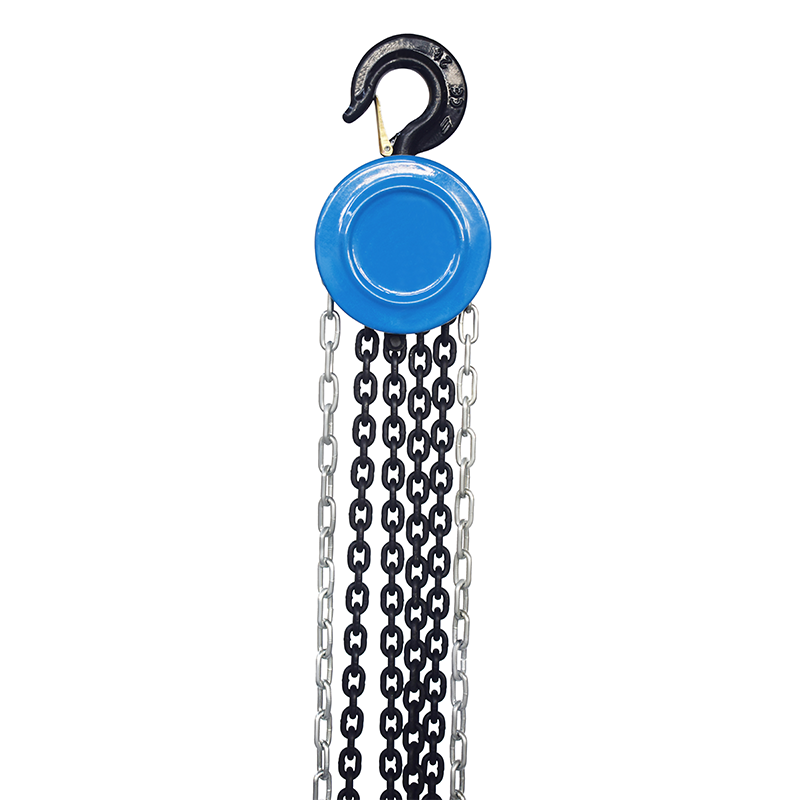
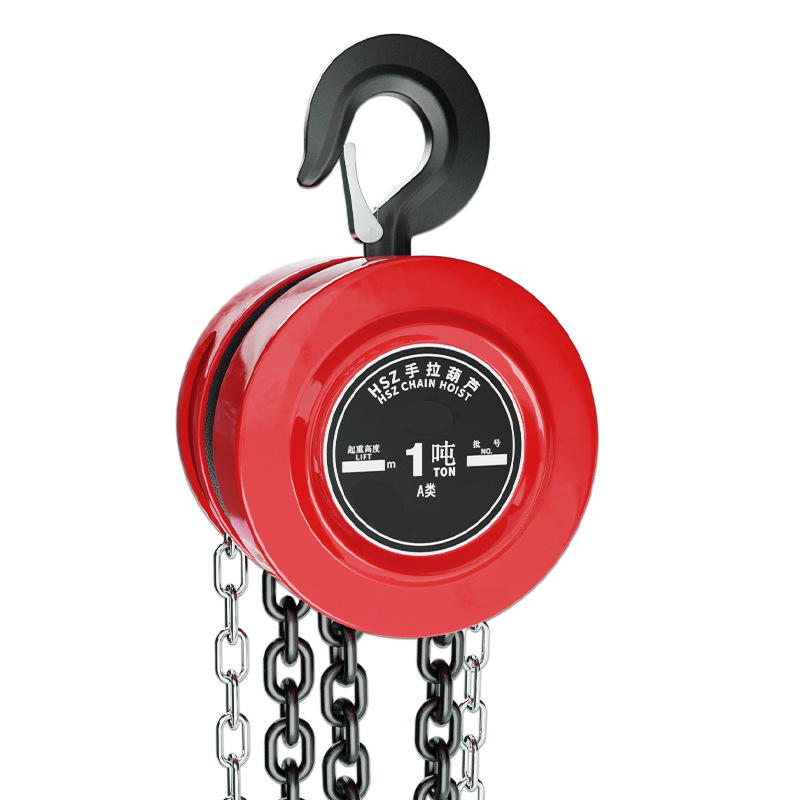
High-Strength Materials and Industrial-Grade Load Capacity
(Keywords: Industrial-grade manual chain hoist, High-load manual chain hoist)
Crafted with a Q235B high-quality carbon steel frame, key load-bearing components (e.g., chain wheels, hooks) undergo heat treatment for reinforcement, achieving a tensile strength ≥600MPa. Standard load capacities range from 0.5 to 10 tons (with 15-ton custom options available), boasting a safety factor of 4:1 (exceeding the industry standard of 3:1). Certified by third-party testing, it withstands continuous loads exceeding 100,000 cycles without structural deformation, making it ideal for lifting industrial heavyweights like machinery and pipelines.
Ergonomic Operation and Precise Control
(Keywords: Smooth manual chain hoist, Controllable lifting manual chain hoist)
Featuring an arc-shaped anti-slip handle (38mm grip diameter, ergonomic hand contour), paired with a precision gear set (gear reduction ratio of 1:12), it requires only 25-35N of operating force (≈2.5-3.5kg thrust) for single lifts, ensuring stable lifting speeds of 5-8m/min. An optimized chain guide groove prevents jamming, delivering positioning accuracy of ±2mm—perfect for precise equipment installation or lightweight cargo positioning.
Multi-Environment Adaptability: Corrosion Resistance & Dust/Waterproofing
(Keywords: Corrosion-resistant manual chain hoist, Durable manual chain hoist)
Surface-treated with a double-layer coating of epoxy zinc-rich primer + polyester topcoat (salt spray test ≥500 hours), or available in 304 stainless steel (suitable for chemical/coastal environments). Critical transmission components (bearings, chains) are equipped with dust covers, achieving an IP54 protection rating (dust/splash water resistance). It operates stably across -20℃ to +60℃, enhancing usability by 40% in harsh scenarios like mines or outdoor repairs.
Compact Storage & Portable Design
(Keywords: Space-saving manual chain hoist, Easy-to-carry manual chain hoist)
Innovative foldable chain storage design retracts the chain fully into the body when unloaded (storage length reduced by 30%). The 1-ton model measures just 320×180×250mm and weighs ≤8kg. With adjustable hook rings (adapting to Φ8-12mm suspension points) and a portable carry handle, it can be easily transported to elevated work points (e.g., shelves, rooftops), boosting space utilization by 25% in storage/maintenance applications.
◆◆ Technical Parameters
| Nominal Capacity | 0.5T - 20T |
| Standard Lifting Height | 2.5m - 3m (customizable up to 12m) |
| Test Load | 1.5 times the rated load (e.g., HS20 test load 250kN/25Ton) |
| Min. Distance Between Hooks | 255mm - 1100mm (increases with tonnage) |
| Hand Chain Pull at Full Load | 157N - 1100N (approx. 16kgf - 112kgf) |
| Number of Load Chain Falls | 1 - 8 rows (more rows for higher tonnage) |
| Hook Opening | 18mm - 80mm |
| Net Weight | 9.5kg - 150kg |
| Packing Dimensions | 27×19×16cm - 70×46×75cm |
| Chain Wire Diameter | 6mm - 10mm (high-strength alloy steel, compliant with EN 818-7 standard) |
| Weight Increase per Meter | 1.5kg - 19.4kg (increases with tonnage) |
| Operating Environment | -20°C to +70°C, explosion-proof, dust-proof, corrosion-resistant (special materials optional) |
| Safety Factor | ≥4 times (static), ≥1.5 times (dynamic) |
◆◆ Product Uses
1. Industrial Assembly & Machinery Installation
In manufacturing plants, chain hoists are critical for aligning heavy components (e.g., engine blocks, gearboxes) during machinery assembly. Their precise load control and low vibration minimize misalignment risks, ensuring accurate positioning. Compact designs fit tight workspaces, while portable models enable flexible movement across assembly lines.
2. Warehouse Logistics & Material Handling
Warehouses often lack fixed power sources or require short-distance cargo movement (e.g., loading/unloading trucks, stacking pallets). Chain hoists eliminate reliance on electricity, operating via manual pulling. Their compact size and corrosion-resistant options (e.g., galvanized chains) suit high-moisture areas, improving efficiency in narrow aisles or outdoor docks.
3. Construction & Infrastructure Maintenance
During building repairs (e.g., ceiling fan installation, roof equipment replacement) or bridge maintenance, chain hoists excel in elevated, hard-to-reach areas. Lightweight yet robust, they allow workers to lift materials (tools, pipes, fixtures) without heavy machinery, reducing setup time and ensuring safety in confined spaces.
4. Mining & Heavy Equipment Repair
Mines and industrial sites have rough terrain and limited access to power. Explosion-proof or heavy-duty chain hoists (with higher safety factors) withstand dust, vibrations, and impacts. They are used to hoist spare parts, repair underground machinery, or adjust conveyor systems, where reliability in harsh conditions is paramount.
5. Stage & Event Setup
Theater stages, concert rigs, or exhibition booths require frequent, precise lifting of lighting fixtures, backdrops, or props. Chain hoists offer silent operation (no motor noise) and smooth load adjustment, enabling crews to position elements quietly during rehearsals or live events, ensuring seamless setups.
Each scenario leverages chain hoists’ core strengths: portability, power-free operation, and adaptability to challenging environments, making them indispensable tools across industries.
◆◆ Product Operate Guide
1. Pre-use Check: Inspect chains for wear, hooks for deformation, and brake function. Ensure no overload (max load ≤ rated capacity).
2. Positioning: Align hook with load center to avoid tilting. Secure load with slings if needed.
3. Lifting: Hold hand chain, pull steadily upward (avoid jerking). Pause midway to confirm stability.
4. Moving: Use trolley or lifting eye to glide horizontally; keep load low for control.
5. Lowering: Release hand chain slowly, letting brake engage gradually. Never drop the load.
Tip: Lubricate chains quarterly for smoother operation. Always follow manufacturer’s safety labels.
◆◆ Product Video
◆◆ FAQ
Q: How to resolve chain jamming or sticking in a manual chain hoist?
A: First, check if the chain lacks lubrication or has foreign objects. Clean debris and apply specialized chain lubricant (e.g., lithium-based grease). Severe jamming may indicate gear wear or chain deformation—replace components. Ensure the chain stays straight during operation to avoid twisting.
Q: What risks arise from overloading a manual chain hoist?
A: Overloading can cause chain breakage, gear damage, hook deformation, or even load dropping. Strictly adhere to the rated load capacity. Stop use immediately if overloaded and inspect components.
Q: How to troubleshoot brake failure in a manual chain hoist?
A: Check if brake pads are worn (replace if thickness <2mm), pawl springs are loose, or debris is jamming the brake. Clean the brake, adjust clearance to 0.5-1mm, and replace components if necessary.
Q: What to do if the hook’s anti-drop device fails?
A: Inspect if the safety latch is missing or deformed. Replace the hook if its opening exceeds 15% of the original size. Regularly check hook wear (retire if worn >10%) and ensure proper closure.
Q: What maintenance is required for manual chain hoists?
A: Monthly: Clean the chain and apply anti-rust grease. Quarterly: Check gear meshing and bearing lubrication. For long-term storage, hang in a dry area and avoid contact with acidic/alkaline substances.
content is empty!

Buying an electric pallet truck? Uncover hidden lifecycle fees, compare lithium vs lead-acid batteries, and avoid costly procurement mistakes.

Eliminate warehouse bottlenecks and manual lifting fatigue. Discover how the right electric pallet truck boosts throughput, safety, and ROI.

Forklift or electric pallet truck? Eliminate bottlenecks by matching the right material handling equipment to your warehouse workflow and space.

Choosing between electric and manual chain hoists? Prevent costly specification errors by comparing duty cycles, costs, and safety in this guide.

Maximize warehouse throughput. Learn how to select the right electric pallet truck by evaluating load realities, duty cycles, and battery types.

Avoid liability & OSHA fines. Learn proper chain hoist inspection intervals: daily to annual, based on service class, per ASME B30.16. Stay safe.

Stop guessing chain hoist capacity. Use this method: add 25% safety margin, factor rigging weight, and match duty cycles for safe, efficient lifting.

Discover safe manual chain hoist setup steps, pre-lift tests, and compliance tips to prevent catastrophic load drops and ensure workplace safety.

Calculate lift height for manual chain hoists with our guide. Prevent dangerous tail chain hazards. Ensure OSHA-compliant rigging. Order correctly.

Stop risking safety with wrong chain hoist specs. Calculate true load, duty cycles, & ensure compliance. Expert guide.

Master electric pallet truck safety and operations. Learn essential SOPs, daily checks, and key features to prevent accidents and boost efficiency.

Maximize electric pallet truck battery life. Compare lead-acid vs. lithium-ion runtimes, lifespans, and maintenance to prevent costly downtime.

Reduce operator fatigue and boost warehouse efficiency with the right electric pallet truck. Learn to select models, battery types, and capacity.

Confused by electric pallet truck jargon? Learn to choose the right walkie, rider, or stacker to maximize warehouse efficiency and boost ROI.

Is a powered pallet truck legally a forklift? Yes. Learn OSHA classifications, mandatory training, and key differences to avoid costly fines.

Industrial lifting carries immense high-stakes realities. Choosing the wrong lifting equipment exposes operations to severe payload damage, strict regulatory penalties, and catastrophic safety failures.

Synthetic rigging drives modern material handling across construction, manufacturing, and logistics. Within this demanding field, the Type 3 flat eye-and-eye configuration stands out as the industry’s default workhorse. It balances immense lifting power and everyday practicality.

Selecting the right lifting sling goes far beyond merely checking a weight capacity chart. It represents a critical safety and operational efficiency decision shaping your entire Total Cost of Ownership (TCO).

Lifting massive industrial loads leaves zero room for error. Selecting the wrong lifting sling doesn't just risk operational downtime. It introduces catastrophic safety liabilities and inflates equipment replacement costs instantly.

While the "3-3-3 rule" recently trended across various fitness platforms, it holds a drastically different meaning in industrial material handling. In the high-stakes environment of industrial lifting, it represents a non-negotiable operational safety and rigging framework.

